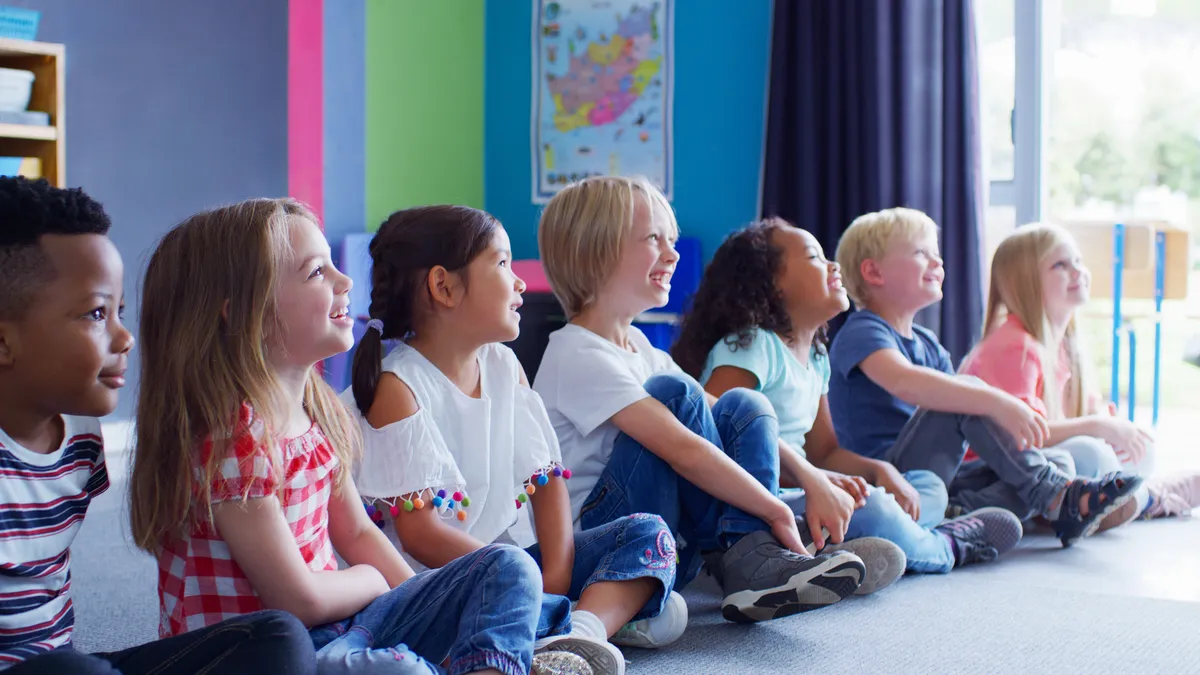
Why Children Learn Better When Language Feels Like Play
Many teachers and caregivers have watched a child resist formal English practice, then joyfully use the same language during pretend play. A child may not want to repeat “I want water” during a drill, but will say it naturally while playing restaurant. Another child may stay quiet during a question-and-answer lesson, but happily speak through a puppet. For early childhood educators, ESL teachers, Montessori guides, homeschool parents, tutors, and caregivers, this is an important reminder: young children often learn best when language feels meaningful, active, and playful.
Play is not the opposite of learning. In early childhood, play can be one of the most natural ways children explore language, relationships, routines, emotions, and ideas. When English is connected to movement, music, props, stories, role-play, and imagination, children get more opportunities to hear, understand, practice, and use language in ways that fit their development.
Play Gives Language a Reason
Young children are more likely to use language when it serves a purpose. In a pretend store, children can ask for food, name colors, count objects, say “thank you,” and take turns. In a puppet scene, they can practice greetings, feelings, helping phrases, or problem-solving language. In a movement game, they can listen to directions, follow actions, and respond with words or gestures.
This matters for early childhood language development because children need more than exposure to vocabulary. They need repeated, meaningful chances to use language in context. A word such as “apple” becomes more useful when a child can say, “I want an apple,” pretend to buy an apple, give an apple to a friend, or sing about liking apples.
For ESL learners and bilingual children, play-based language learning can make English more understandable. Children can rely on pictures, objects, gestures, facial expressions, and actions while they are still building spoken English. For shy speakers, play can provide a softer entry point because the child can speak as a character, answer with a partner, or participate through movement before speaking alone.
Play Still Needs Teacher Intention
Playful language practice does not mean leaving everything to chance. Teachers and caregivers can guide play gently by choosing useful phrases, modeling language, adding rhythm, and creating small situations where children need to communicate.
For example, a teacher might prepare a pretend doctor scene with the phrases “Are you okay?” and “I need help.” A homeschool parent might use toy animals to practice “Where is the dog?” A Montessori guide might connect a practical life activity to “May I have a turn?” or “I am finished.” These are playful moments, but they are also structured language opportunities.
The goal is not to force children to perform. The goal is to create a rich setting where language appears again and again with meaning.
Music and Movement Make Play More Memorable
Music and movement activities can make playful English practice even more engaging. Rhythm helps children hear patterns in language. Songs allow repetition without making practice feel like a drill. Movement helps children connect words to action.
A simple phrase such as “I can jump” can become a movement game. Children hear the phrase, see the action, jump safely in place, clap the rhythm, and say the words with the group. This supports listening and speaking skills while also giving children a reason to move with purpose.
Activity: Playful Phrase Path
Try an activity called Playful Phrase Path.
Choose one useful phrase, such as “Can I play?” First, show the meaning with two toys or puppets. One puppet is building with blocks. The other puppet asks, “Can I play?”
Next, invite children to listen and watch. Then add a gesture, such as pointing gently to the blocks or placing a hand on the heart. Have children copy the gesture. After that, clap the phrase: “Can I play?” Repeat it as a group.
Now turn the phrase into play. Children take turns using puppets, blocks, or picture cards. One child asks, “Can I play?” Another answers, “Yes,” or “Yes, come play.” Children who are not ready to speak can point, hold the puppet, clap, or say the phrase with a partner. More confident children can add “Thank you” or “My turn, please.”
This activity helps children hear the language, see the meaning, move with the phrase, say the words, and use English in a social situation.
A Better Way to Build Participation
Children often learn better when language feels like play because play gives English a purpose, a context, and an emotional connection. Start with one phrase, one prop, one rhythm, and one playful situation. Keep it short, repeat it often, and allow children to participate in different ways.
A Musical English-style approach reflects these child-development principles by combining music, movement, role-play, storytelling, performance, and practical language practice. Teachers, educators, parents, guardians, and caregivers can explore Musical English at www.mymusicalenglish.com as a practical approach for bringing these methods into young children’s learning, while keeping expectations realistic, child-centered, and evidence-informed.
Thank you for taking the time with me to learn more about Musical English, a Early Child Development program
Sincerely,
Keila
For more information on Musical English and our programs, click here to learn how Musical English can help improve the life of your child.
* Click here to protect your privacy and safety on the Internet.